by Noah Redmond
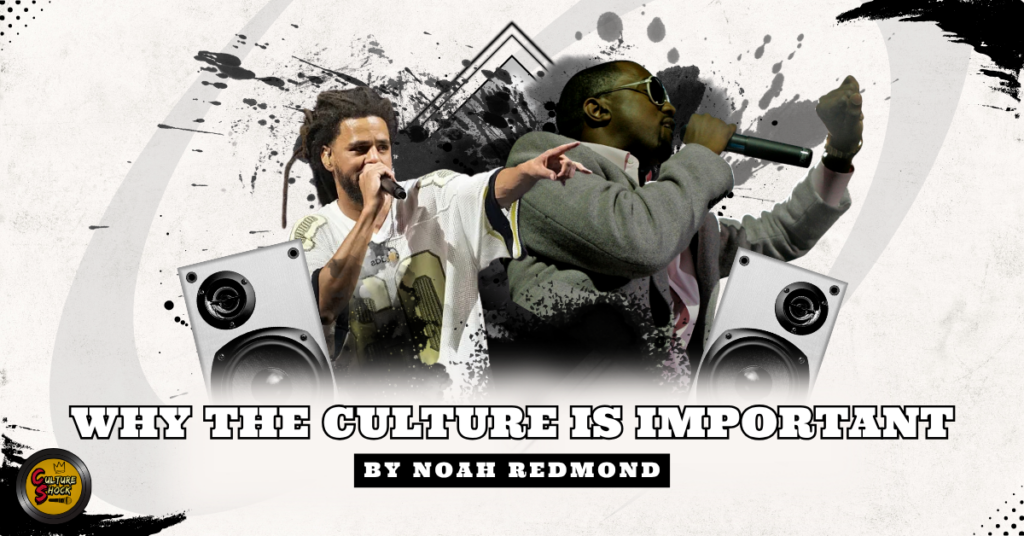
Having attended J Cole’s tour last summer (shoutout to Jayden, my co-host on Culture Shock, for providing the tickets) and looking at Kanye’s tour while being in a Leadership course where I’m positioning my topic around making Hip-Hop more appreciated, I’m starting to see just how important the culture of Hip-Hop is to America and how much more education and love about this genre should be shared among people who aren’t too familiar.
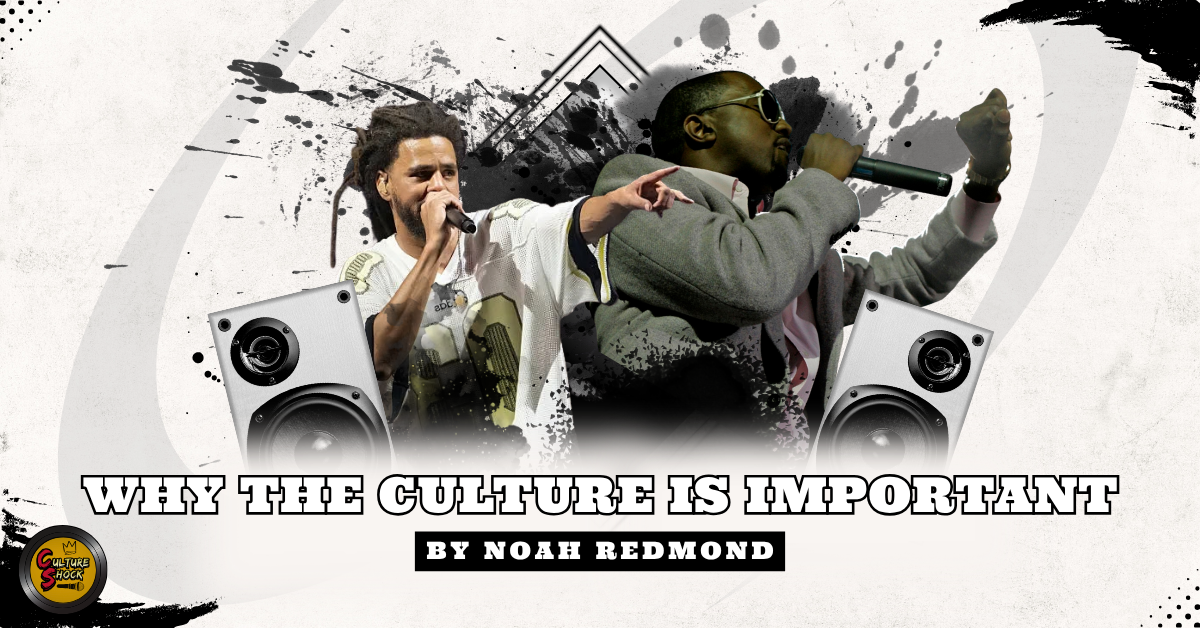
Starting off with J Cole’s concert, that was officially the first show I’ve been to, and what an amazing experience it was! People of all backgrounds gathered to watch one of the best emcees in his generation perform. The show was in a packed United Center, which shows how many people love his music. Seeing the various groups of people signals to me that his music resonates with many people, not just one demographic. Coming from a person who doesn’t listen to J Cole too often, I felt the energy of his music as well as the crowd who sang along with him (including Jayden). He also educated the audience mid-performance on specific stories, which spoke to his lived experience as a black man in America. The audience should be made aware of these experiences since this gives the culture a voice to speak against the prejudice and many systemic issues our country has. This is one of the angles an emcee has and Cole delivered it perfectly.
The Kanye tour that came to Chicago in September again brought out a community that loves the Hip-Hop genre, and this shows it’s not just one demographic that appreciates this music. For instance, I have coworkers who love Kanye and his music (I would say one of them is a little too appreciative of him…), but they’re not of the African American demographic. This goes to show that the culture of Hip-Hop isn’t just being rotated around and consumed by the same group of people; our culture is spread and loved by many. I even had funny encounters at my primary job, where people from other countries would come up to me and show a video of Kanye’s Chicago performance from a social media post and would ask me who he was. So not only am I seeing the appreciation of Kanye’s music, but I also see diverse groups of people in real time get introduced to him and his music.
Last, the course that I’m in, Social Innovation, teaches students how to attack social and environmental issues differently by using design and systems thinking to solve them. We’re tasked with learning what exactly systems thinking is and then choosing a social issue we want to solve. I chose spreading love through increasing appreciation of Hip-Hop. I think the examples here are good ways to increase the appreciation of the culture of Hip-Hop, but I think being in this class is also another effective way to show appreciation for it. I’ve been able to go in depth at times in class about specific topics on Hip-Hop. Whether it’s the difference between Rap and Hip-Hop, what the culture really is, the pillars of Hip-Hop, and interesting ways Hip-Hop is implemented in media such as Rhythm Roulette – a short series that challenges producers to make instrumentals with a huge limit on how they can actually make the instrumental, something you can find on YouTube made by Mass Appeal. My professor is usually intrigued by the history and culture of Hip-Hop, so much that he sometimes asks follow-up questions to further understand what I’m talking about. If we were to have more outlets where we can just speak on the influence of Hip-Hop’s culture, I honestly think more people would appreciate Hip-Hop for what it is.
The culture of Hip-Hop has had outreach and influence like no other genre. When it comes to clothing, dances, trendy words, lyrical skill, and overall community, I can confidently say Hip-Hop has it best out of every genre. This is a genre that despite many people’s claims and misinformation of it being too vulgar for most people, it’s one of the most powerful out all genres while being one of the youngest to do so. The culture is amazing because many can connect through shared emotion and lived experiences, this culture is important because its artists want to be heard.